

Overview
For decades, the Harvard MBA has been considered the gold standard of business education.
Offered by Harvard Business School (HBS), the two-year, full-time MBA remains one of the most selective, influential, and globally recognized management programs in the world.
Every year, the program attracts exceptional candidates from diverse backgrounds, including:
- Consulting
- Investment banking
- Private equity
- Technology
- Entrepreneurship
- Healthcare
- Military leadership
- Public policy
Despite its reputation, many applicants still ask an important question:
Is the Harvard MBA worth it in 2026?
With tuition, living expenses, and opportunity costs often exceeding $250,000, candidates increasingly evaluate MBA programs based on career outcomes, leadership development, networking opportunities, and long-term return on investment.
This comprehensive Harvard MBA Review explores the complete HBS experience, including academics, admissions, curriculum, placements, entrepreneurship, student life, and whether the degree continues to justify its elite reputation.
 About the Harvard MBA
The Harvard MBA is a two-year, full-time management degree built around leadership development, general management education, and real-world decision making.
Unlike many MBA programs that encourage specialization from the beginning, Harvard focuses first on creating strong business leaders with broad managerial capabilities.
As a result, students develop a strong understanding of multiple business functions before choosing specialized areas of interest.
The program combines:
- Leadership development
- Strategic thinking
- Financial decision-making
- Operational management
- Entrepreneurial thinking
- Global business awareness
Consequently, graduates leave with a balanced understanding of how organizations operate and grow.
Why Harvard MBA Remains One of the World’s Most Prestigious Degrees
Few academic brands carry the global recognition of Harvard.
However, the value of Harvard Business School extends well beyond prestige.
Over decades, HBS has built an ecosystem that combines world-class education with exceptional professional opportunities.
Key advantages include:
- Leadership-focused learning
- Powerful employer relationships
- Global alumni influence
- Strong entrepreneurship support
- Access to elite peer networks
- Outstanding career outcomes
Furthermore, the Harvard alumni network includes CEOs, founders, investors, policymakers, and business leaders across virtually every major industry.
For many graduates, this network becomes one of the most valuable assets of the MBA experience.
Harvard MBA Academic Experience
The academic experience at Harvard Business School differs significantly from traditional classroom learning.
Instead of relying primarily on lectures, students participate actively in discussions and decision-making exercises.
Every class requires preparation, engagement, and thoughtful analysis.
Students are expected to:
- Analyze complex business situations
- Defend strategic decisions
- Challenge assumptions
- Evaluate leadership trade-offs
- Work through uncertainty
As a result, learning becomes highly interactive rather than passive.
Many graduates describe the classroom experience as one of the most transformative aspects of the Harvard MBA.
 The Famous Harvard Case Method
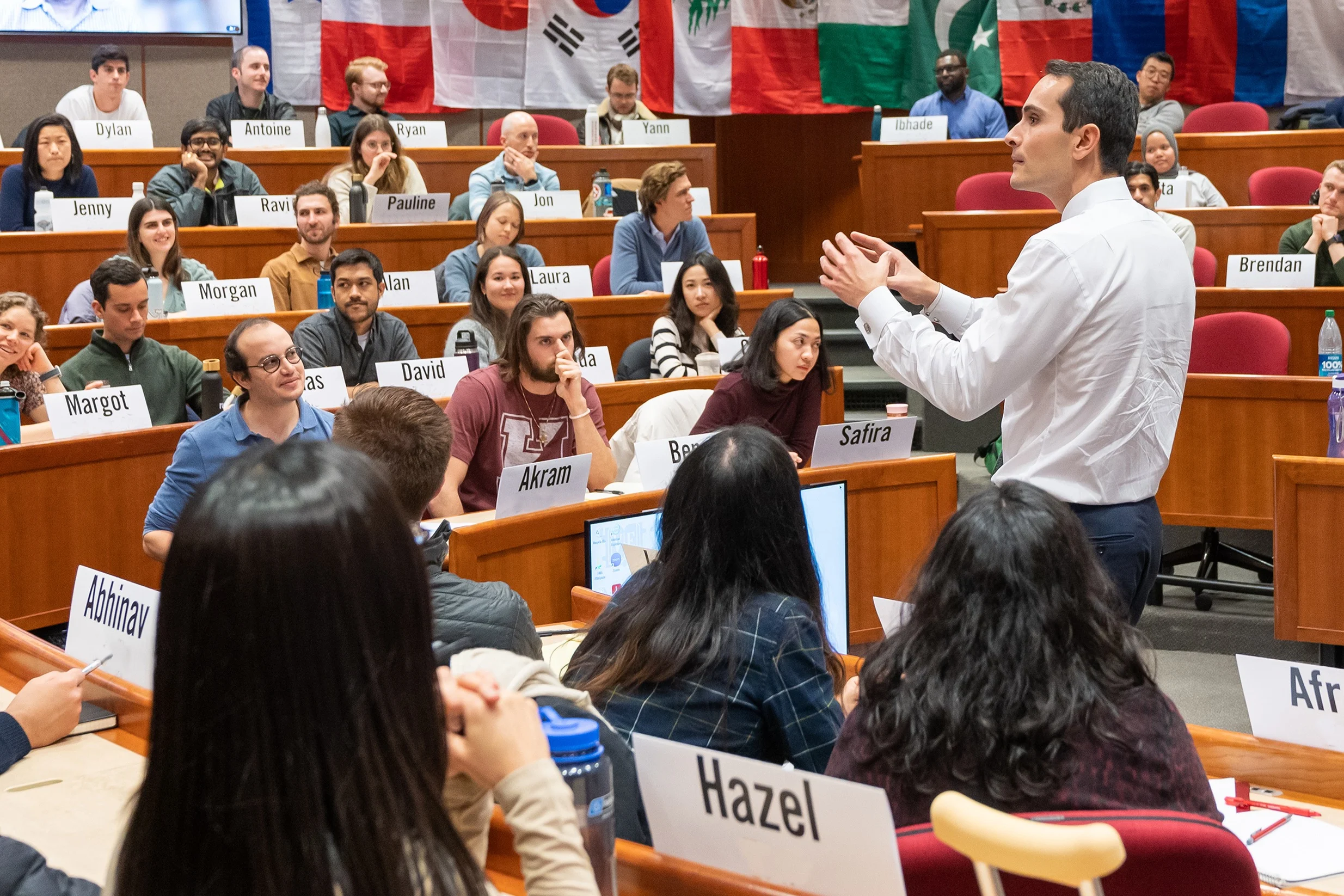
The Harvard MBA is globally recognized for its Case Method.
Unlike traditional lecture-based programs, HBS uses real-world business situations as the foundation for classroom learning.
Each case presents an actual business challenge faced by real executives and organizations.
Students must evaluate the situation, identify possible solutions, and justify their decisions.
Typical case discussions involve:
- Leadership dilemmas
- Strategic choices
- Financial decisions
- Market expansion opportunities
- Organizational challenges
- Competitive threats
Throughout the MBA, students analyze hundreds of cases from around the world.
Consequently, they develop skills that employers consistently value.
Skills Developed Through the Case Method
- Executive communication
- Critical thinking
- Leadership judgment
- Decision-making ability
- Persuasion and influence
- Problem-solving under pressure
Because these skills closely mirror real management responsibilities, employers often view Harvard MBA graduates as highly prepared for leadership roles.
Harvard MBA Curriculum
The Harvard MBA curriculum consists of two major phases.
Initially, students complete a shared foundational curriculum.
Later, they gain the flexibility to customize their MBA experience through electives.
This structure ensures both breadth and specialization.
Required Curriculum (Year One)
During the first year, all MBA students complete the Required Curriculum.
The goal is to create a common management foundation across the entire class.
Core learning areas include:
- Finance
- Marketing
- Strategy
- Leadership
- Organizational Behavior
- Operations Management
- Economics
- Entrepreneurship
- Technology and Data Science
Additionally, students learn how these disciplines interact within real organizations.
This integrated approach helps develop a broader understanding of business decision-making.
What Makes the Required Curriculum Unique?
Rather than studying business functions in isolation, students examine how decisions in one area affect outcomes across an entire organization.
For example:
- A marketing decision may affect operations
- A financial decision may influence strategy
- A leadership decision may impact culture and performance
Therefore, students develop a systems-thinking mindset that is valuable in executive leadership positions.
Academic Learning Beyond the Classroom
The first year also includes extensive collaboration with classmates.
Students work in teams, participate in study groups, and engage in frequent discussions outside class.
As a result, learning extends far beyond formal coursework.
The combination of classroom debate, peer learning, and practical analysis creates a highly immersive academic environment.
Elective Curriculum (Year Two)
After completing the Required Curriculum, students enter the elective phase of the Harvard MBA.
This second year provides significantly greater flexibility and allows students to tailor the programme around their personal interests and long-term career goals.
Unlike the structured first year, students can choose from a wide range of courses offered across Harvard Business School and, in some cases, other Harvard graduate schools.
As a result, students build specialized expertise while maintaining the broad leadership foundation established during the first year.
Popular Harvard MBA Elective Areas
- Private Equity and Venture Capital
- Investment Banking
- Entrepreneurship
- Technology and Innovation
- Business Analytics
- Corporate Strategy
- Leadership and Organizational Change
- Healthcare Management
- Marketing and Brand Management
- Global Business
Furthermore, students can customize their academic journey based on evolving market trends and emerging industries.
This flexibility is one of the reasons Harvard continues to attract candidates with diverse career aspirations.
FIELD Global Immersion Experience
One of the most distinctive elements of the Harvard MBA is the FIELD (Field Immersion Experiences for Leadership Development) programme.
FIELD complements the traditional case method by emphasizing action-based learning.
Instead of only discussing business problems in the classroom, students work directly on real-world projects.
Through FIELD, students:
- Develop leadership skills
- Collaborate in diverse teams
- Work with international companies
- Solve real business challenges
- Gain global business exposure
Moreover, students often travel internationally and engage with organizations operating in different economic and cultural environments.
This hands-on approach helps bridge the gap between theory and practice.
 Entrepreneurship at Harvard Business School
Harvard Business School has become one of the world’s most influential entrepreneurship ecosystems.
While many graduates pursue consulting or finance careers, a growing number choose entrepreneurship.
Harvard supports founders through:
- Startup-focused electives
- Entrepreneurship clubs
- Incubators and accelerators
- Faculty mentorship
- Investor access
- Alumni founder networks
Additionally, students benefit from proximity to the broader Harvard innovation ecosystem, which includes researchers, engineers, investors, and entrepreneurs.
Many successful startups have emerged directly from relationships formed during the MBA programme.
Harvard MBA Class Profile
The Harvard MBA attracts one of the most accomplished and diverse student populations in the world.
Every year, thousands of candidates apply for a limited number of seats.
The result is a highly competitive cohort composed of future leaders from numerous industries and countries.
Recent Harvard MBA Class Snapshot
| Class Metric | Typical Profile |
|---|---|
| Class Size | Approximately 900–1,000 students |
| Average Work Experience | 4–5 Years |
| Women | Approximately 45–46% |
| International Students | 35%+ |
| Countries Represented | 70+ Countries |
| Average GPA | Strong Academic Performance |
Consequently, students gain exposure to a wide variety of perspectives, industries, and leadership styles.
Student Diversity
Diversity is a major strength of the Harvard MBA experience.
Students come from backgrounds that extend far beyond traditional business roles.
Common pre-MBA industries include:
- Consulting
- Investment Banking
- Private Equity
- Technology
- Military
- Healthcare
- Government
- Non-Profit Organizations
- Manufacturing
- Entrepreneurship
Because of this diversity, classroom discussions often include multiple viewpoints on the same business problem.
This significantly enriches the learning experience.
Harvard MBA Admissions Process
The Harvard MBA admissions process is among the most selective in the world.
Admission decisions are based on a holistic evaluation rather than a single metric.
The admissions committee evaluates:
- Academic ability
- Leadership potential
- Professional achievements
- Career progression
- Personal character
- Future impact potential
Therefore, successful candidates demonstrate excellence across multiple dimensions.
Step 1: Online Application
Applicants begin by submitting an online application through Harvard Business School’s admissions portal.
The application captures academic, professional, and personal information.
Step 2: Resume
Candidates submit a professional resume highlighting:
- Career progression
- Leadership experience
- Professional achievements
- Quantifiable impact
Strong resumes typically demonstrate increasing responsibility and measurable accomplishments.
Step 3: Essays
Harvard’s essay component allows candidates to share their story, motivations, and goals.
Authenticity is particularly important.
Rather than presenting a perfect image, successful applicants often focus on meaningful experiences, leadership lessons, and personal growth.
Step 4: Recommendations
Applicants must provide professional recommendations.
Strong recommendations usually come from supervisors or senior colleagues who can speak directly about:
- Leadership ability
- Professional impact
- Teamwork
- Character
- Growth potential
Step 5: Interview
Selected applicants receive an invitation to interview.
The interview is highly personalized and often focuses on details from the application.
Interviewers assess:
- Leadership potential
- Career vision
- Self-awareness
- Communication skills
- Motivation for Harvard
Because interview invitations are selective, receiving one is generally considered a positive sign.
GMAT & GRE Requirements
Harvard Business School accepts both the GMAT and GRE.
There is no official minimum score requirement.
However, competitive applicants typically present strong quantitative credentials.
Typical Test Score Expectations
| Exam | Competitive Range |
|---|---|
| GMAT | 700–760+ |
| GRE | Strong Quantitative & Verbal Scores |
Nevertheless, admissions decisions are never based solely on test performance.
Harvard consistently emphasizes holistic evaluation.
Academic Expectations
Academic excellence remains an important component of the admissions process.
Successful applicants typically demonstrate:
- Strong undergraduate performance
- Analytical capability
- Quantitative readiness
- Intellectual curiosity
- Consistent achievement
However, applicants come from a wide variety of academic disciplines.
Popular undergraduate backgrounds include:
- Business
- Economics
- Engineering
- Mathematics
- Sciences
- Humanities
- Social Sciences
As a result, Harvard values intellectual diversity alongside academic strength.
 Harvard MBA Career Outcomes
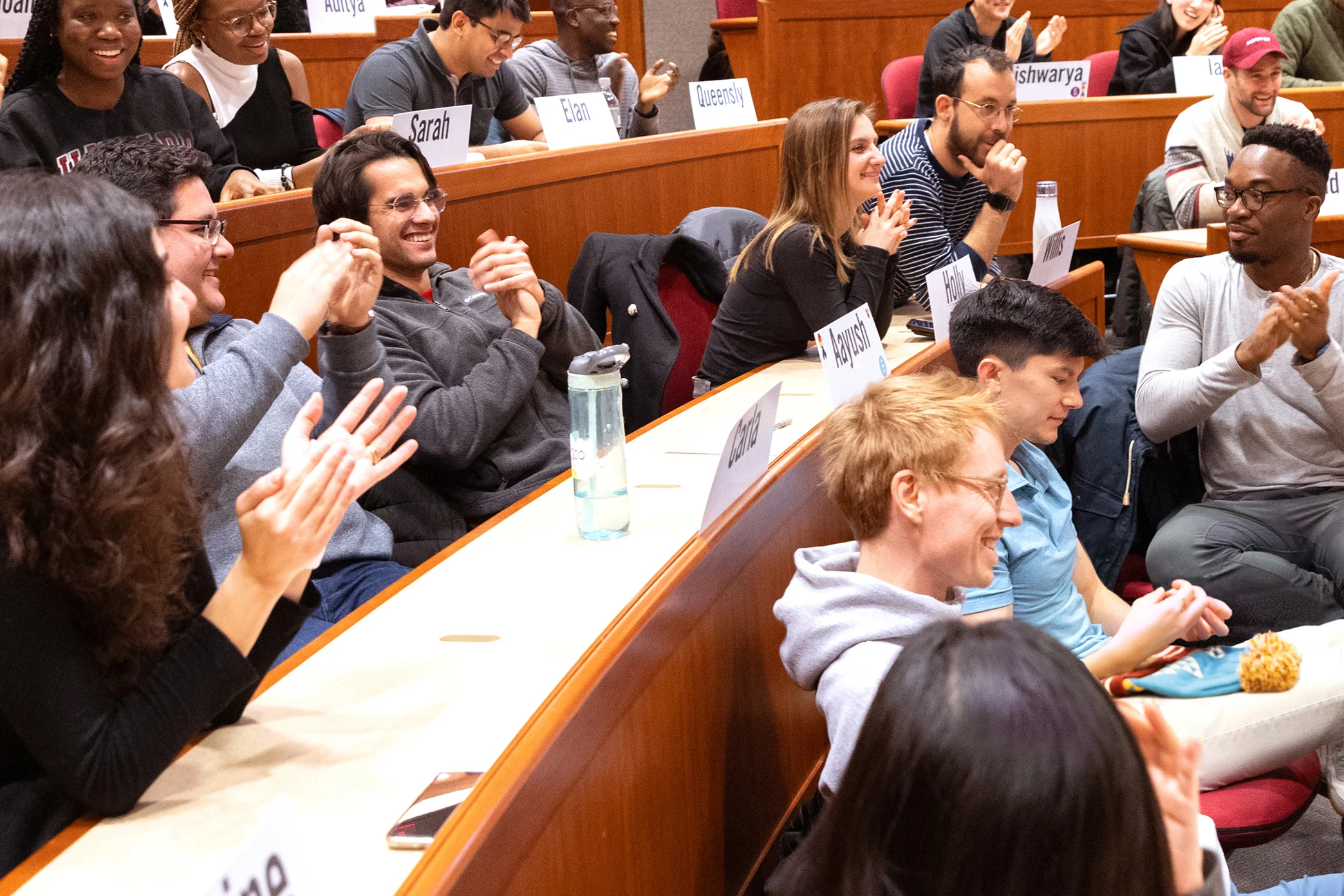
One of the biggest reasons professionals pursue a Harvard MBA is the programme’s exceptional career outcomes.
Graduates consistently secure leadership-track opportunities across consulting, finance, technology, healthcare, entrepreneurship, and general management.
Moreover, employers view Harvard MBA graduates as individuals who can quickly assume responsibility, manage teams, and drive business results.
As a result, Harvard continues to maintain one of the strongest employment records among global business schools.
Employment Highlights
| Career Metric | Outcome |
|---|---|
| Employment Rate | Among the highest globally |
| Average Base Salary | $175,000+ |
| Signing Bonus | $30,000+ average among many employers |
| Major Recruiting Sectors | Consulting, Finance, Technology |
| Global Career Mobility | Strong international opportunities |
These outcomes demonstrate the long-term value of the Harvard MBA brand.
Top Industries Hiring Harvard MBA Graduates
Harvard MBA graduates enter a broad range of industries.
However, several sectors consistently recruit large numbers of HBS students each year.
Consulting
Consulting remains one of the most popular career paths after graduation.
Students are attracted by leadership exposure, strategic problem-solving opportunities, and accelerated career progression.
Major consulting recruiters include:
- McKinsey & Company
- Boston Consulting Group (BCG)
- Bain & Company
- Deloitte
- Strategy&
- Accenture Strategy
Finance
Finance continues to be a major destination for Harvard MBA graduates.
Students pursue careers across:
- Investment Banking
- Private Equity
- Venture Capital
- Asset Management
- Corporate Finance
- Hedge Funds
Top finance recruiters frequently include:
- Goldman Sachs
- J.P. Morgan
- Morgan Stanley
- Blackstone
- KKR
- Carlyle
Technology
Technology hiring has grown significantly over the past decade.
Consequently, many graduates now pursue roles in:
- Product Management
- Business Strategy
- Corporate Development
- Operations
- Growth Leadership
Major technology employers include:
- Amazon
- Microsoft
- Meta
- Apple
- Adobe
Entrepreneurship & Startup Careers
Not every graduate joins a large corporation.
In fact, Harvard has become one of the world’s strongest MBA programmes for entrepreneurship.
Many students launch ventures immediately after graduation.
Others join early-stage startups where they can take on significant leadership responsibilities.
Harvard supports entrepreneurs through:
- Startup incubators
- Investor access
- Founder networks
- Venture competitions
- Entrepreneurship courses
- Alumni mentorship
Furthermore, many successful founders continue to support future generations of Harvard entrepreneurs.
Harvard MBA Salary & Compensation
Harvard MBA graduates earn some of the highest compensation packages in business education.
Compensation varies by industry, geography, prior experience, and job function.
Nevertheless, salary outcomes remain consistently strong across sectors.
Typical Compensation Components
- Base Salary
- Signing Bonus
- Performance Bonus
- Stock Compensation
- Long-Term Incentives
While consulting and investment banking often provide high starting compensation, technology and entrepreneurship can generate substantial long-term upside through equity participation.
The Harvard Alumni Network
The Harvard alumni network is frequently cited as one of the most valuable aspects of the MBA experience.
Graduates gain access to a global community of leaders across virtually every major industry.
The network spans:
- Corporate executives
- Entrepreneurs
- Investors
- Government leaders
- Consultants
- Technology innovators
Additionally, alumni often support fellow graduates through mentorship, recruiting, business partnerships, and investment opportunities.
This network continues to create value throughout an individual’s career.
 Student Life at Harvard Business School
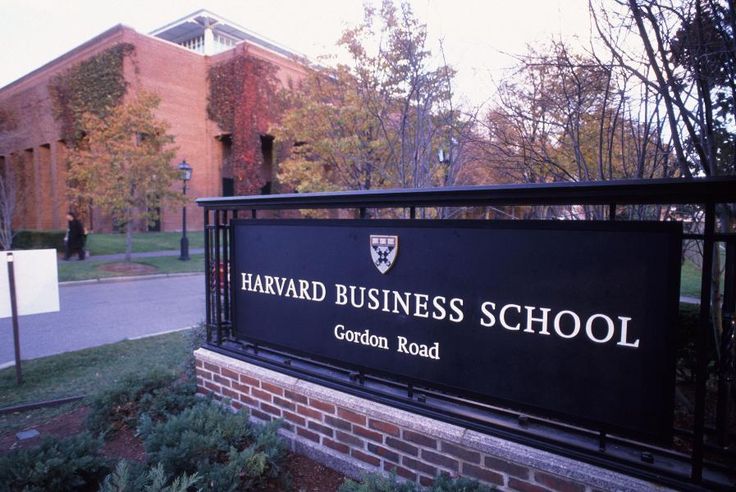
Life at Harvard extends beyond academics.
Students participate in a highly active community filled with leadership opportunities, social events, conferences, and professional clubs.
Popular student organizations include:
- Finance Club
- Consulting Club
- Technology Club
- Entrepreneurship Club
- Healthcare Club
- Women in Business
- International Student Organizations
As a result, students build friendships, professional relationships, and leadership experiences that often last decades.
Harvard MBA Fees & Cost of Attendance
Pursuing a Harvard MBA requires a significant financial investment.
However, many students view the programme as a long-term investment in career growth and earning potential.
Estimated Annual Costs
| Expense Category | Estimated Cost |
|---|---|
| Tuition | $75,000+ |
| Housing & Living Expenses | $30,000+ |
| Health Insurance | Additional |
| Books & Materials | Additional |
| Personal Expenses | Varies |
Consequently, the total cost of attendance across two years can exceed $250,000 when opportunity costs are included.
Scholarships & Financial Aid
Harvard Business School provides substantial financial aid support.
Unlike many institutions that focus heavily on merit awards, Harvard emphasizes need-based financial assistance.
Funding options include:
- Need-Based Scholarships
- External Scholarships
- Employer Sponsorship
- Student Loans
- Military Funding Programs
Therefore, many students receive meaningful financial support that reduces the overall cost burden.
Is the Harvard MBA Worth It?
For many candidates, the answer is yes.
However, the value depends on individual career goals, financial circumstances, and long-term aspirations.
Reasons Why the Harvard MBA Is Worth It
- World-class global reputation
- Elite employer access
- Exceptional alumni network
- Leadership-focused education
- Strong career outcomes
- Powerful entrepreneurial ecosystem
- Long-term earning potential
Factors to Consider
- High financial investment
- Opportunity cost of leaving work
- Competitive admissions process
- Intensive academic workload
Ultimately, candidates seeking leadership acceleration, career transformation, or entrepreneurial growth often find the investment worthwhile.
Who Should Pursue the Harvard MBA?
The programme is particularly well suited for professionals who want to:
- Transition into leadership roles
- Move into consulting or finance
- Accelerate career growth
- Launch a startup
- Build a global network
- Develop executive-level management skills
Furthermore, candidates who thrive in collaborative, discussion-based learning environments often gain the most from the Harvard experience.
Final Verdict
The Harvard MBA remains one of the most influential business degrees in the world.
Its combination of leadership development, academic rigor, employer access, entrepreneurship support, and global networking opportunities continues to attract ambitious professionals from every continent.
Although the financial investment is substantial, the long-term benefits can be equally significant.
For candidates seeking transformative career growth, access to elite opportunities, and lifelong professional connections, Harvard Business School continues to set the benchmark for MBA education.
Decades after its creation, the Harvard MBA remains one of the strongest platforms for building a global leadership career.
Frequently Asked Questions
How long is the Harvard MBA?
The Harvard MBA is a two-year, full-time programme.
Does Harvard MBA require work experience?
Yes. Most admitted students have between 2 and 6 years of professional experience, although there is no strict minimum requirement.
What GMAT score is needed for Harvard MBA?
There is no minimum score requirement. However, competitive applicants often submit GMAT scores above 700.
Is Harvard MBA good for consulting?
Yes. Harvard Business School is one of the world’s strongest MBA programmes for consulting careers and consistently places graduates into leading consulting firms.
Is Harvard MBA worth the cost?
For many candidates, the combination of career outcomes, leadership development, global network, and long-term earning potential makes the investment worthwhile.
