


Overview
The Michigan Ross Full-Time MBA is a two-year program built around leadership, action-based learning and career development. Located in Ann Arbor, the program combines a strong business curriculum with real-world projects, global opportunities and access to major employers.
For students considering an MBA in the US, Ross stands out especially for its strong career-switching outcomes, collaborative culture and hands-on approach to business education.
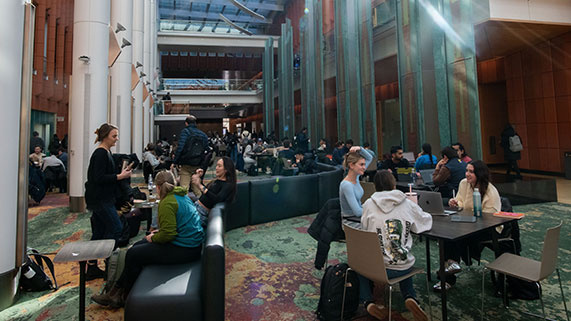 Michigan Ross MBA at a Glance
| Feature | Details |
|---|---|
| Program | Michigan Ross Full-Time MBA |
| Duration | 2 years |
| Location | Ann Arbor, Michigan |
| Class Size | 379 students |
| Average Work Experience | 5.8 years |
| International Students | 40% |
| Median Base Salary | $170,000 |
| Median Bonus | $30,000 |
| Offer Within 6 Months | 92% |
What Makes Michigan Ross MBA Different?
The biggest differentiator at Ross is its focus on action-based learning. Students are not limited to classroom theory. They get opportunities to work on real business challenges and apply what they learn to practical situations.
The signature Multidisciplinary Action Projects (MAP) course allows MBA students to work with real companies on business problems. Ross has been developing this approach for more than 30 years.
The program also offers a collaborative community, leadership development and opportunities to explore business through projects, student organizations and global experiences.
Michigan Ross MBA Curriculum
The Ross MBA combines core business fundamentals with electives and experiential learning. Students build a strong foundation before using electives and concentrations to develop deeper expertise.
The MBA requires 57 credits, and students can take up to 10 required credits outside Michigan Ross within the University of Michigan.
Students can also pursue areas such as:
- AI
- Data and Business Analytics
- Design Thinking and Innovation
- ESG
- Healthcare Management
- Management Science
- Real Estate Development
Career Outcomes After Michigan Ross MBA
Career outcomes are one of the strongest reasons to consider Ross. In the latest employment data, 92% of graduates received a first offer within six months.
The school reports a $170,000 median base salary and a $30,000 median bonus. Ross also reports that 95% of graduates are career switchers, making the program particularly attractive for professionals planning to move into a new industry or function.
Top Industries for Ross MBA Graduates
| Industry | Share of Accepted Offers | Median Base Salary |
|---|---|---|
| Consulting | 33.5% | $190,000 |
| Financial Services | 19.5% | $175,000 |
| Technology | 13.1% | $143,000 |
| Healthcare | 10.2% | $138,500 |
| Consumer Packaged Goods | 8.9% | $125,000 |
Other graduates move into manufacturing, energy, retail and other industries. Ross graduates also pursue careers across consulting, finance, technology, healthcare, marketing, operations, entrepreneurship and general management.
Who Recruits Michigan Ross MBAs?
Ross has strong relationships with leading companies across multiple industries. Employers highlighted by the school include:
- McKinsey & Company
- Boston Consulting Group
- Bain & Company
- Amazon
- Microsoft
- Goldman Sachs
- J.P. Morgan
- Nike
- PepsiCo
In 2025, 266 companies hired a Michigan Ross graduate or intern, while 81% of accepted offers were obtained through school-facilitated recruiting activities.
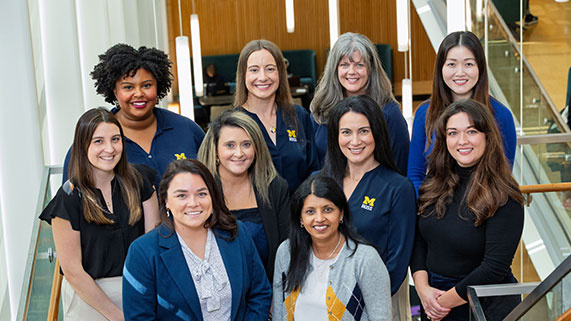 Michigan Ross MBA Class Profile
The Class of 2027 includes professionals from a wide range of academic, professional and international backgrounds.
| Profile | Class of 2027 |
|---|---|
| Class Size | 379 |
| Women | 39% |
| International | 40% |
| Average Work Experience | 5.8 years |
| Average GPA | 3.43 |
| Average GMAT | 731 |
| Average GRE Quant | 163 |
The class represents 32 countries and 31 U.S. states, creating a diverse environment for students interested in international business.
Michigan Ross MBA Fees
For the 2026–27 academic year, Full-Time MBA tuition is $78,586 per year for Michigan residents and $83,946 per year for non-Michigan residents and international students.
Students should also budget for housing, food, books, personal expenses and other mandatory fees. Ross provides scholarships and financial-aid options to help students manage the cost of the MBA.
Michigan Ross MBA Admissions
Ross uses a holistic admissions process rather than relying on a single factor such as GPA, test score or work experience.
Applicants need the equivalent of a U.S. bachelor’s degree. Ross accepts the GMAT, GRE and Executive Assessment, while certain other professional tests can also be submitted as evidence of quantitative readiness.
Ross does not require a specific number of years of work experience. However, almost all incoming students have at least two years of experience, and the average student enters with around five years.
 2026–27 MBA Application Deadlines
| Round | Deadline | Decision |
|---|---|---|
| Round 1 | September 8, 2026 | December 11, 2026 |
| Round 2 | January 4, 2027 | March 19, 2027 |
| Round 3 | March 29, 2027 | May 14, 2027 |
Student Life at Michigan Ross
Life at Ross extends well beyond the classroom. Students can choose from 70+ student clubs covering professional interests, sports, social activities, identity groups and community involvement.
Ann Arbor also gives students a classic university-town experience with access to food, sports, culture and a strong University of Michigan community.
Ross students can also access centers and initiatives focused on areas such as leadership, entrepreneurship, sustainability and business impact.
Career Support at Ross
The Career Development Office supports students throughout the MBA journey with career coaching, recruiting preparation, networking and employer engagement.
- Career coaching
- Recruiting preparation
- Interview preparation
- Recruiter engagement
- Career treks
- Alumni networking
- Career fairs and workshops
The support also continues after graduation, with Ross alumni receiving access to career coaching, events, executive education opportunities and other resources.
Who Should Choose Michigan Ross MBA?
The Ross MBA is a strong fit for students who:
- Want to switch industries or functions
- Prefer practical, action-based learning
- Are targeting consulting, finance, technology or healthcare
- Want access to major U.S. employers
- Value a collaborative MBA community
- Want strong career support before and after graduation
- Are comfortable investing in a two-year U.S. MBA
Michigan Ross MBA: Pros and Considerations
| Strengths | Things to Consider |
|---|---|
| Strong career outcomes | High overall cost of a U.S. MBA |
| 95% career-switcher rate | Competitive admissions |
| Action-based learning | Ann Arbor is not a major coastal business hub |
| Strong consulting and finance recruiting | Two-year full-time commitment |
| 70+ student clubs | International students need to consider U.S. work authorization |
 FAQs
FAQs
Is Michigan Ross a good MBA?
Yes. Ross combines strong employment outcomes, action-based learning, career support and a collaborative student community. Its career-switching outcomes are particularly notable.
What is the Michigan Ross MBA salary?
The latest employment report shows a $170,000 median base salary and a $30,000 median bonus.
What is the Michigan Ross MBA acceptance rate?
Ross does not publish an acceptance rate on its current Full-Time MBA admissions pages. Applicants are evaluated holistically based on their academic, professional and personal profile.
How much work experience is required for Michigan Ross MBA?
Ross does not require a specific number of years of work experience. However, almost all incoming students have at least two years of experience, with the average student entering with about five years.
Is GMAT required for Michigan Ross MBA?
Ross accepts GMAT, GRE and Executive Assessment scores. Applicants can also use certain alternative test scores and other evidence to demonstrate quantitative readiness.
Is Michigan Ross good for career switching?
Yes. Ross reports that 95% of its graduates are career switchers, making it one of the program’s strongest selling points for professionals planning a major career transition.
Final Verdict
The Michigan Ross MBA is a compelling choice for professionals who want a combination of strong career outcomes, practical business experience and a supportive MBA community. Its $170,000 median base salary, 92% offer rate within six months and 95% career-switcher rate make the program especially attractive for candidates seeking career acceleration or a significant career change.
If you want an MBA that emphasizes learning by doing rather than classroom theory alone, Ross deserves serious consideration. The combination of MAP, strong employer relationships, career support, student clubs and the wider University of Michigan ecosystem makes Ross a well-rounded option for ambitious MBA candidates.
